lecturer in digital media and culture at the University of Manchester, UK.

sam.hind@manchester.ac.uk

  • Living Maps III: Grounding Knowledge

    Indigmaps
    Five Dreamings, painter – Michael Nelson Jakamarra, assisted by Marjorie Napaljarri, Papunya, Central Australia, 1984 acrylic on canvas, 122 x 182 cm.

    Next Tuesday will see the third seminar in the Living Maps series. After ‘Mapping the Field’ and ‘Hidden Histories’, ‘Grounding Knowledge’ will see Øyvind EideIain Boal and David Pinder tackle issues of power and politics. I will be travelling down to London from Manchester for it myself.

    Hosted this time at QMUL, the seminar will aim to interrogate the epistemological bases for mapping in the modern world. Questions such as “how are maps situated?”, “how do they tell specific stories?” and “how do they propose new ways of existence?” all pertinent.

    Content from seminar’s ONE and TWO can also be viewed over at the Living Maps website. Tickets for each seminar are priced at £5 for students/unwaged and £20 for professionals/academics. They can be purchased individually from here. It will run from 18.00 – 20.30.
  • Big Data: Methodological Challenges

    If the Big Data debate still interests you, then there’s a great looking paper from Ramine Tinati et al. that has recently been published in Sociology. Entitled ‘Big Data: Methodological Challenges and Approaches for Sociological Analysis’, it wades straight into the ongoing debate over the opportunities and pitfalls of new social data, with specific and extended reference to the Twitter platform.

    What is doubly of interest is their case study; an analysis of Twitter data linked to a UK tuition fee protest of 2011 (a year after the passing of the legislation). I’ve seen very little analysis of these events, despite their scale and importance, so this is an important intervention.

  • NSS 2014 Hackathon

    countries-2x

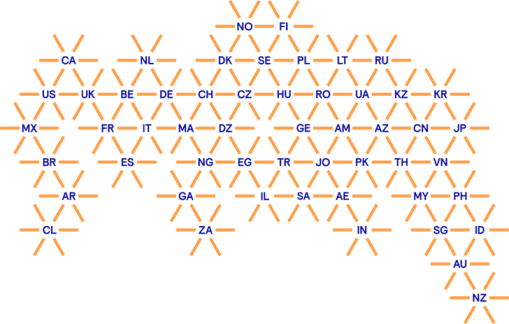
    From March 24th -25th the Hague will host the third Nuclear Security Summit. Its aim is to ‘prevent nuclear terrorism around the globe’ and will be an opportunity for world leaders to meet and discuss this rather delicate issue. Previous summits were hosted in Seoul and Washington DC.

    As part of the growing interest in analyzing the flow of social data swirling through various medias during the two days, the Utrecht Data School will host a hackathon. In their own words it will be an attempt to ‘visualize and understand all the commotion around NSS with social media monitoring tools, data-analysis and datavisualization’. Anyone with an interest in the NSS, social media analysis or datavisualization is encouraged to attend. Participation is free.

    Buzzcapture are co-hosting the event, and it runs from 9am on both days at Rotslab in Utrecht. The UDS team is led by Mirko Schaefer.  If you want to be involved, email Mike van Stroe (mike@dataschool.nl).

  • Activism III: Samuel Carlisle on ‘disruptive technologies’

    Completing a hat-trick of activism posts, I thought I’d embed a video of Sukey developer, electronic engineer, activist, hacker and maker (!) Samuel Carlisle speaking on ‘Disruptive technologies’ at the ThinkTwice conference. Hosted in Frankfurt by Pirate Parties International, it was an attempt to bridge the gaps in knowledge between PPI, academia and the NGO world. Its tagline was ‘Away from Keyboard’ so much of the content was centered on the the interplay between offline and online activism.

    Samuel’s presentation itself was an attempt to talk about the fostering of a ‘read/write’ world in which individuals learn the ability to interrogate the ‘black-box’ nature of modern technological devices in order to engage in civic action. The details of the talk as well as his slides are available here.

  • Activism II

    Another exciting looking event coming up on activism, this time at QMUL on May 1st-2nd. Let’s hope it doesn’t clash with any possible demonstrations, as is common on May Day. Entitled ‘Power and Resistance: Theory and Imaginative Activism’, the conference will look to discuss three themes:

    • New opportunities and possibilities for political interventions and resistance
    • The relationship between theory and practice in the spheres of political struggles
    • New forms of activism on new digital platforms of communication capable of generating radical resistance against hegemonic powers

    There is a call for contributions out now, with a requirement to forward a 500 word abstract to powerandresistance2014@gmail.com before March 31st. Based on these three themes there will be three panels:

    • ‘Disobedient Theory: Interventions into Normality’
    • ‘The Agony of Power: Politics and Resistance’
    • ‘Technopolitics: Activism and Subversion in the Digital Age’

    For more details on each of these, head over to the Power & Resistance conference website.