lecturer in digital media and culture at the University of Manchester, UK.

sam.hind@manchester.ac.uk

Category: Space

  • Reading

    080515_denis_wood017

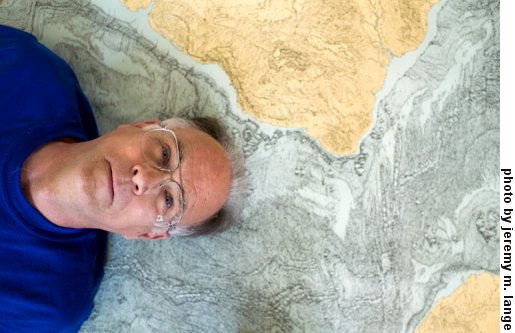
    Denis Wood‘s dissertation might just be my next project. It was completed in 1972, and titled I Don’t Want To, But I Will. It’s all to download from his website here. If you don’t fancy wading through the whole 685 pages, at least read the acknowledgements, where there is a quite wonderful attack on his supervisors – in true Wood style! Here’s a section from his preface describing it:

    This dissertation makes no pretense at being objective, whatever that ever was. I tell you as much as I can. I tell you as many of my beliefs as you could want to know. This is my Introduction. I tell you about this project in value-loaded terms. You will not need to ferret these out. They will hit you over the head and sock you in the stomach. Such terms, such opinions run throughout the dissertation. Then I tell you the story of this project, sort of as if you were in my-and not somebody else’s -mind. This is part II of the dissertation. You may believe me if you wish. you may doubt every word. But I’m not conning you. Aside from the value-loaded vocabulary-when I think live done something wonderful, or stupid, I don’t mind giving myself a pat on the back, or a kick in the pants. parts I and III are what sloppy users of the English language might call “objective.” I don’t know about that. They’re conscientious, honest, rigorous, fair, ethical, responsible-to the extent, of course, that I am these things, no farther. (P.12 Introduction)

    Also, I’ve never come across the word ‘rodomontade’ before reading it in Wood’s introduction!

  • Judith Butler’s ‘Bodies on the street’ lecture from last year. As linked to by Derek Gregory.

    Derek Gregory's avatargeographical imaginations

    Judith Butler‘s Wall Exchange‘Bodies on the street’, delivered at the Vogue Theatre in Vancouver last year, has now been posted on YouTube:

    And a Q&A the following day with UBC faculty at the Peter Wall Institute for Advanced Studies is here:

    You can access the text of an early version of the lecture here and here.

    View original post

  • Mapping as Militant Research

    3cs_maps

    The Counter Cartographies Collective (colloquially known as ‘3Cs’) have a new piece in ACME: An International E-Journal for Critical Geographies (freely available to download). It’s part of a theme issue on ‘Anarchist and Autonomous Marxist Geographies’.

    Much of the 3Cs work is inspired by Deleuze’s comments on mapping:

    Run lines, never plot a point! Speed turns the point into a line! Be quick, even when standing still! Line of chance, line of hips, line of flight…Make maps, not photos or drawings. (Deleuze and Guattari 2004 [1980]: 27)

    Their form of ‘autonomous cartography’ is intended to  discover new political and geographical horizons – challenging existing representations of everyday spaces. Most of this work has come in the form of some fantastically rich campus maps of UNC-Chapel Hill where the 3Cs is based. These maps have aimed to contest the way in which the university is positioned as an ‘ivory tower’ and an elitist institution, and also to make connections between the many different people who live and work on the campus itself.

    The partial cancellation of the annual Labour Day holiday by the UNC administration (2005) brought the collective together, however unknowingly at that point. In the article, they say that they ‘were frustrated with the continual talk among activist scholars on campus about their own geographically disparate interests’ (450) and wanted to instead provide an opportunity for all staff (research, support, maintenance, catering) and students (UG, PG, part-time, full-time) to provoke collective discussion on the ways in which the UNC-Chapel Hill campus was organized. It was a process of exploration and reflection, getting passers-by to fill in questionnaires, draw maps and participate in interviews on their work experiences (450).

    These events were, in their words, kinds of situated ‘drifts’ or dérives intentionally and awkwardly straddling the divide between protest and research, confusing enough for those who approached them (450). One of the main aims of this initial Labour Day event was to discover the extent of precarious labour at UNC-Chapel Hill. That is, the number of people in temporary, insecure, or piecemeal employment. Research staff, catering assistants, short-term lecturers etc. anyone who might otherwise be unable to participate in organized labour protests.

    They drew inspiration from a Spanish feminist group Precarias a la Deriva (Precarious Women Adrift – an introduction to their initiative is here) – an organization who visit sites of precarious labour (domestic, self-employed, per-hour) and ‘picket-survey’ (446) women with the question; ‘what is your strike?’ in order to help connect those at the fringes of the labour market. The 3Cs evoked these attempts at involving the precariously employed in the art of collective protest on their own university campus.

    Other projects followed. The DisOrientation guide – a collaboratively mapped tool for campus activism – was borne out of the Labour Day event and, according to the article, was distributed to students, through activist networks, in undergraduate classes, and local community centres (455), helping people to understand the complex nature of UNC-Chapel Hill, the jobs people undertake, and the spaces they create (versions 1.0 and 2.0 downloadable here). Moreover, to encourage people to imagine an alternative university campus aside from universalized, sanitized or hegemonic understandings.

    In the 3Cs own words:

    By producing maps as militant research, autonomous cartography constitutes a conceptual framework for understanding and creating geographic and political change in the post-Fordist economy. This work is premised on the idea that geographic knowledge and spatial innovation are created from movements and people engaged in struggle, thus giving rise to autonomous politics within the collective. 3Cs’ experiences with autonomous cartography illustrate how mapping can function as a form of militant research, producing new knowledges and subjectivities, while also investigating and instigating political change. The mapping process itself enacts a different form of knowledge production that creates new social relations and geographies. (461)

    Whilst it may be a truism amongst critical cartographers that maps are political, it still remains difficult to provide empirical evidence for their use – let alone production – in specific circumstances. The work of the 3Cs gifts those working at the intersection of mapping and political action (myself included) some very real examples of how best to proceed in using mapping as a potentially empowering tool for knowledge production, spatial imagination, self-awareness and political change.

  • Mengele’s Skull

    I posted back in August about Keenan and Weizman’s upcoming Mengele’s Skull: The Advent of a Forensic Aesthetics and have now got round to reading it. Firstly, it’s a small and short book with a fair number of colour images. It is these pictures that are critical to Keenan and Weizman’s narrative. Although I don’t want to spoil it for those who maybe haven’t had the chance to read it (an earlier version can be found in Cabinet here), or have not been acquainted with the Forensic Architecture project more broadly, I do still want to say a few things.

    The exhumation of (supposedly) Josef Mengele’s body inaugurated (page 11) a rather unique form of war criminal investigation. One different to that of either the testimony of the witness (of which Adolf Eichmann was sentenced under), or that of the textual document that many traditional criminal investigations are centred upon (Nuremberg Trials). That of the forensic.

    Each type of investigation, say Keenan and Weizman, operates in a particular space or ‘forum’. Or better still (as the space does not pre-exist it’s operation) is constructed through a set of investigative performances, where disputed and otherwise fractious entities (human/non-human; scientist/skull) are brought together for a particular purpose. In this case, an inversion of the perhaps now standard CSI approach; an interrogation of the skeleton with different presumptions and inverse purpose.

    It was not a case of asking the skeleton “how did you die?”, but – with the identity of the person in question: “who are you?” (17-18). As Keenan and Weizman point out, “the Mengele investigation was conducted in much the same way as a missing persons investigation would be” (19). Perhaps ironically, the many people who were ‘forcefully disappeared’ by dictatorial forces in South American during the 1970s were re-identified using the very same techniques employed during the Mengele investigation. In doing so, this ‘methodological proximity’ helped to move such investigation “beyond the ethical categories of victim and perpetrator” (61), and establish it firmly within a material forum (with identity the only aim).

    The success of the Mengele investigation was in many ways down to German forensic scientist Richard Helmer, who had developed a technique he called ‘electronic visual mixing’. In essence, an apparatus whereby Helmer could superimpose an image of the individual (Mengele) onto a clay cast (Mengele’s skull) and work a video camera between the two to establish a match between photo and cast. These image overlays could be produced in different splits so as to produce a rather haunting image of the skull cast complete with pictorial facial features from the photograph (even with Mengele’s felt hat perched upon it). In doing so, Helmer was able to persuade, quite decisively, many of the other forensic scientists and anthropologists involved in the investigation. Moreover, it was this process that also persuaded the many other victims, witnesses, state officials and media personnel eager to hear of the results of the investigation. This analytical method served as a foundational moment in forensic anthropology, and the construction of a faithful ally in the pursuit of now-dead war criminals (the skeletal object or ‘super-subject’ as a truthful witness[66]), whom in death had escaped the legal, juridical, bodily and political repercussions of their crimes.

    But of course, this notion of the truthful ‘super-subject’ has something of a twist. Whilst one of the most prominent members of the Mengele investigation, Clyde Snow, said that “[b]ones make good witnesses” (quoted on 66) – it is indeed this construction of the truthful object that forms the most crucial point of this event. Snow, Helmer and all the other scientists were present to do one thing: persuade. It was up to them to persuade all relevant parties as to their level of doubt. Previous to the introduction of Helmer’s techniques, the doubt, arguably, would have been much higher. How would the skeleton otherwise have been interrogated? If they had not succeeded in persuading all parties how would forensic anthropology look now? Would forensic anthropology even exist? Moreover, how would the witness and textual investigations fare considering this apparent failure in a new investigatory technique? As Keenan and Weizman say:

    Something which was not perceivable, which did not count, made its way into the domain of evidence and judgement, and in doing so had to alter the stage on which it appeared. (68)

    Helmer’s ‘electronic visual mixing’ not only transformed the field of forensic science/anthropology, but also radically changed the shape of war crimes fora. The assignation of the bones of Mengele with an agential – and legal – force the scientists in the Mengele investigation allowed them, as Snow says above, ‘to speak’. Not only a political act of expanding such fora to include the otherwise non-human but also a transformation of the protocol, discourse and procedure within. Alongside the witness and the textual document stood the object; imbued with all the power to speak (or, more correctly, be spoken for), to be discussed and to be disputed.

  • Cities without ground

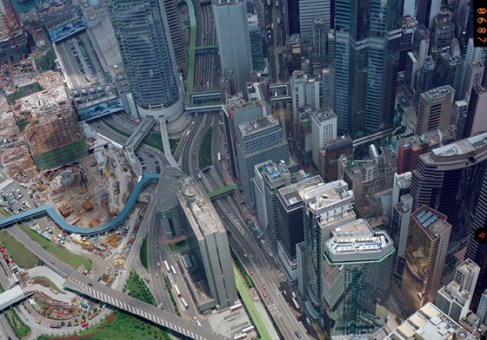
    Via BLDGBLOG I came across a wonderful book called Cities Without Ground: A Hong Kong Guidebook. It’s a book about a city (Hong Kong, obviously) so dense, interconnected and labyrinthine the notion of ground really doesn’t hold much weight. Both physically (HK is built on steep slopes) and culturally (there is no concept of ground). Instead, ‘verticality’ is order of the day. From their website:

    Cities Without Ground explores this condition by mapping three-dimensional circulation networks that join shopping malls, train stations and public transport interchanges, public parks and private lobbies as a series of spatial models and drawings. These networks, though built piecemeal, owned by different public and private stakeholders, and adjacent to different programs and uses, form a continuous space of variegated environments that serves as a fundamental public resource for the city. The emergence of the shopping malls as spaces of civil society rather than of global capital— as grounds of resistance— comes as a surprise. (Emphasis added)

    I love the last sentence. What could be more intriguing than re-conceiving these centres of exhaustive, voracious consumer capitalism as fertile spaces of resistance? There’s also some great maps of the kinds of routes one (as a pedestrian) can take through these multi-level, public-private passages. Moreover, what does this mean for the map itself? The kinds of maps the Cities Without Ground authors (Jonathan Solomon, Clara Wong and Adam Frampton) have created are somewhat awkward and don’t really look like they have any navigational use. This, of course, is why they are so fantastic. They really say something about the difficulty of delineating the very messy spatial characteristics of a city like Hong Kong. Something that many other cities just don’t have.

    The photo below is from their website: Citieswithoutground.com

    Image