
I’ve just returned from a week-long fieldtrip to the island of Gozo, hence the lack of posts on here. I’ve also started to read a lot of articles on mobilities and methodologies recently, and this really wasn’t a coincidence. Fieldtrips provide the opportunity to think about empirical opportunities away from the usual inhabited spaces of reading and writing (i.e. the office desk, the commute etc.) Also, with the weather in the UK typical for the time of year there was nothing better than flying out for some winter sun (23 degrees anyone?), island exploration and discussion. I’ll talk of two parts to the fieldtrip that were worthwhile for myself.
Interviews
In the first instance there were two group interviews (of 11/12 people) with 3 individuals (local mayor, holiday business owner x2) focused around a variety of island-based questions on immigration, asylum, cultural identity, tourism, local food & drink, environmental/energy issues, war and empire, EU funding, economic stability, crime and travel connections. Although the questions were for the benefit of the students (although asked by all), the dynamics of each of the two interviews were critical for understanding appropriate interview techniques. The benefits of a large interview panel were multifarious, despite a number of potential pitfalls. We were able to cover a wide range of topics without jumping arbitrarily between subjects due to the entangled nature of the themes discussed (EU funding > bridges > crime etc.). Although this did require some initiative and timing, making the right judgements on when to move topic and when to continue the current line of questioning. It also gave the students enough time to compose questions and allowed a more varied interview path. No one person was responsible for asking all the questions. Also, in interview 1 we arranged ourselves in a ’roundtable’ fashion that arguably levelled out the power relations between interviewee and interviewer. It took place in the local council building in a clean, air-conditioned event room. The interview arrangement was in contrast to the classic confrontational dynamic of the one-to-one interview that can be daunting for those involved due to the bodily proximity and exposure to the interviewee. The large table (complete with water, coffee and biscuits) gave interviewers enough space and bodily distance to feel comfortable and confident enough to ask questions. Interview 2 was a ‘poolside’ interview at the apartments we stayed in. Both interviewees were joint owners of the holiday complex and seemed happy and relaxed at being interviewed on sunloungers by the resort pool (much like the rest of us…)! Questions didn’t flow as easily as the initial interview but did take on an informal structure. Both interviews were interspersed with a few jokes, communal laughs and general at-ease gestures. Both contained a number of challenging and straightforward questions for interviewees and the size of contributors helped in mediating some difficult topics. Talking to Mediterranean islanders about North African immigration and asylum policy is a prickly subject. The range of interviewers helped to disperse the conflict between subjects, allowing some ‘softer’ questions to bookend the difficult ones. With some students having a more confrontational technique (helping to open some thematic doors), and others a more laidback approach we were able to put our subjects in a non-threatening position, getting an array of rich answers in the process.
Travel
The second part of the fieldtrip that was particularly worthwhile involved different modes of transport. In the week away I travelled:
On foot (short distances to the local village, around supermarkets, up steps, hillsides and pilgrimage routes, around monuments and along coastlines)
By car and people carrier (middle and long-distances of between 1/2 hour and 3 hours from village to town, island to island and from holiday complex to ferry port; with 3 people and with 6 people, as navigator and passenger, on shopping trips and on day trips)
By taxi, minibus and airport shuttle (in the UK to the airport at 5am, across an unfamiliar landscape from airport to hotel complex, by an Asian Mancunian and a Maltese driver, from complex to airport back across a now-familiar route, from aeroplane to terminal, with hand-luggage)
By public bus (from town to village, from town centre to tourist attraction, on a newly privatized service, on air-conditioned vehicles, by the rhythms and luck of a local service, with locals and fellow tourists alike, with conversations with bus drivers, for considerably less money than in the UK!)
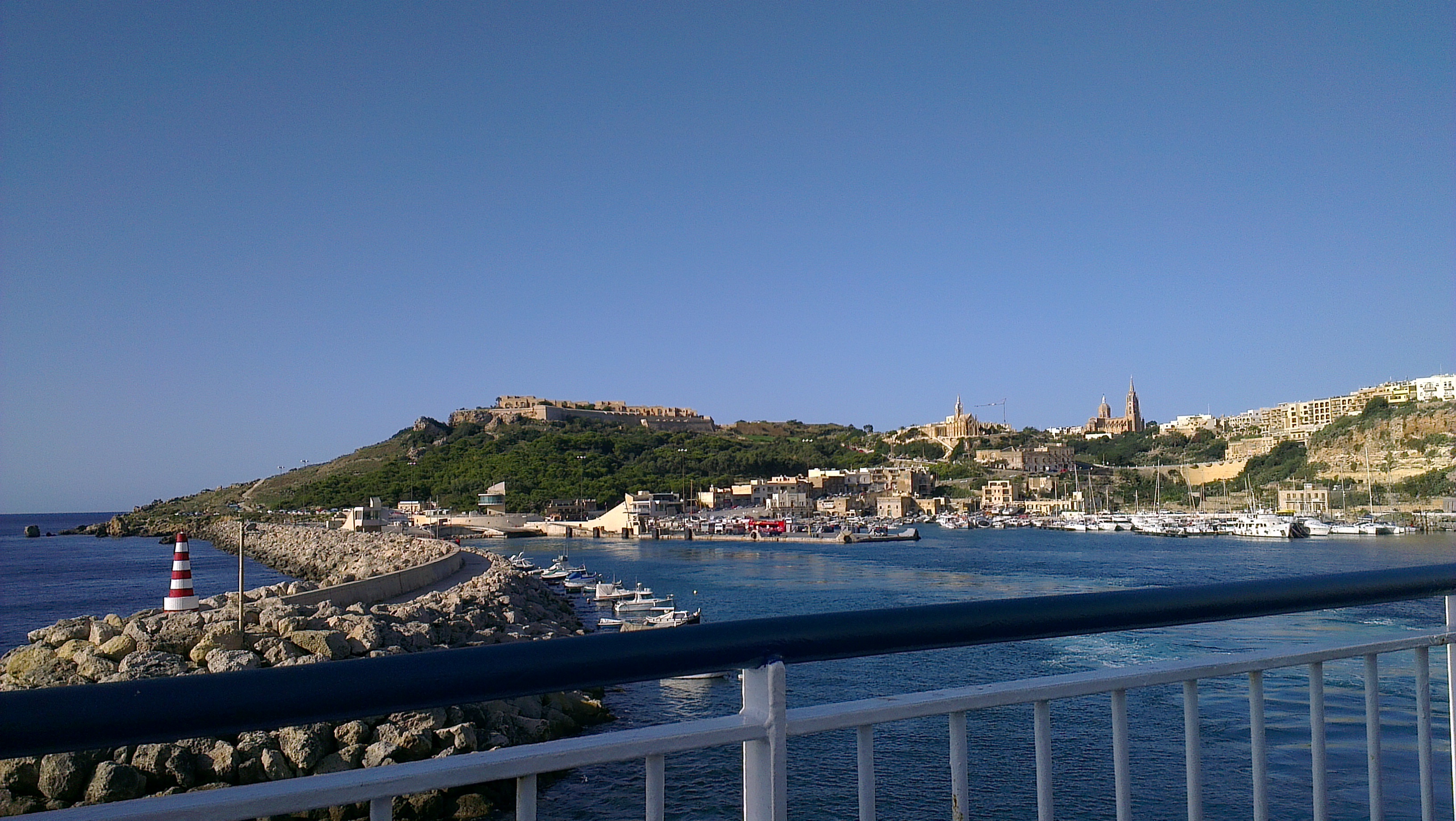
By ferry (from an uninspiring Maltese port to a far more picturesque Gozitan marina [see above], from Cirkewwa to Mgarr, by Gozo Channel Company Ltd, as a foreign tourist, as a car passenger, as a day-tripper rather than commuter)
By aeroplane (from Manchester to Malta, from gloomy English rain to balmy Mediterranean sunshine, by low-cost airline, alongside lecturers, students and other travellers, enjoyed with conversation and reading literature, by the window and aisle)
On my return to the UK I also subsequently travelled by bicycle (home – centre of Manchester), local bus service (airport – home, Coventry – Warwick), and lastly, train (Manchester – Birmingham – Coventry and back again).
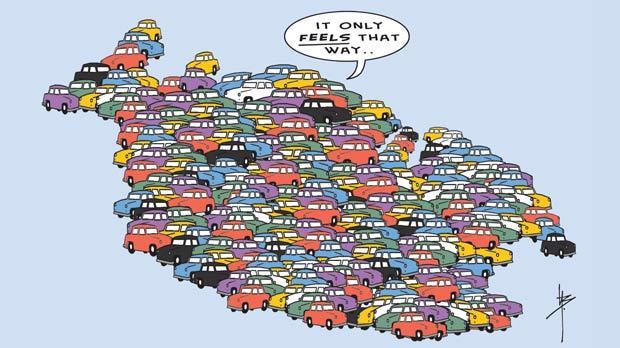
By all accounts that’s a fair bit of travelling. 11 different modes of transport. Multiple journeys and many miles! My only recommendation is never to drive out of Valletta during rush-hour. An astonishing 310, 409 cars are registered in Malta, seemingly most of which were trying to get out its capital at the same time as we were.
Here’s an article, book, video and a novel I’ve all read and watched recently that have shaped these personal experiences:
Ingold, T (2004) Culture on the ground: The world perceived through feet. Journal of Material Culture. (subscribers only – although look for any of Ingold’s work at his staff page here)
Pink, S (2012) Situating Everyday Life. (available on amazon for £18~) and her What is Sensory Ethnography video on the SAGE methodspace website (http://www.methodspace.com/video/what-is-sensory-ethnography-by)
Poe, E.A. (1999 [1838]) The Narrative of Arthur Gordon Pym of Nantucket (a novel by Penguin Classics, around £6/7)
 Sam Hind