lecturer in digital media and culture at the University of Manchester, UK.

sam.hind@manchester.ac.uk

  • Another post

    by Patrick Meier at his prolific iRevolution blog took my interest today. Posted back in June 2011, ‘A List of Completely Wrong Assumptions About Technology Use in Emerging Economies’ is about the situated nature of technology. I challenge anyone to read through the comments and still argue that maps aren’t local, situated objects of knowledge. Nothing intuitive, obvious or general about them. As Meier says:

    In one of the training workshops we just had, I was explaining what Walking Papers was about and how it might be useful in Liberia. So I showed the example below and continued talking. But Kate jumped in and asked participants: “What do you see in this picture? Do you see the trees, the little roads?” She pointed at the features as she described the individual shapes. This is when it dawned on me that there is absolutely nothing inherently intuitive about satellite images. Most people on this planet have not been on an airplane or a tall building. So why would a bird’s eye view of their village be anything remotely recognizable? I really kicked myself on that one. So I’ll write it again: there is nothing intuitive about satellite imagery. Nor is there anything intuitive about GPS and the existence of a latitude and longitude coordinate system.

     And

    More wrong assumptions revealed themselves during the workshpos [sic]. For example, the “+” and “-” markers on Google Map are not intuitive either nor is the concept of zooming in and out. How are you supposed to understand that pressing these buttons still shows the same map but at a different scale and not an entirely different picture instead?

    Good for thinking through how situated protest mapping is in the UK – built for specific reasons, terrains and people. Plenty of the comments draw on experiences in non-Western countries, but as one of them says, there is just as much variation in knowledge within Western countries. Using digital maps on mobile devices draws on a whole new world of required actions, and who’s to think the tap, pinch and scroll of touch-sensitive phones is anything like intuitive? New technologies always require a learning process.


  • Reading

    080515_denis_wood017

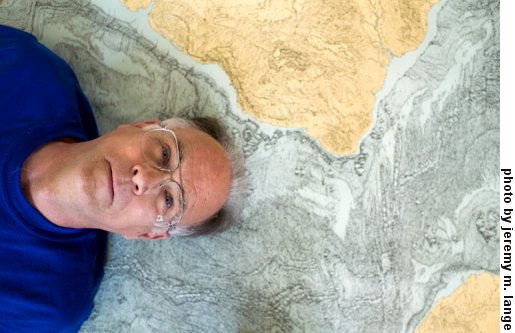
    Denis Wood‘s dissertation might just be my next project. It was completed in 1972, and titled I Don’t Want To, But I Will. It’s all to download from his website here. If you don’t fancy wading through the whole 685 pages, at least read the acknowledgements, where there is a quite wonderful attack on his supervisors – in true Wood style! Here’s a section from his preface describing it:

    This dissertation makes no pretense at being objective, whatever that ever was. I tell you as much as I can. I tell you as many of my beliefs as you could want to know. This is my Introduction. I tell you about this project in value-loaded terms. You will not need to ferret these out. They will hit you over the head and sock you in the stomach. Such terms, such opinions run throughout the dissertation. Then I tell you the story of this project, sort of as if you were in my-and not somebody else’s -mind. This is part II of the dissertation. You may believe me if you wish. you may doubt every word. But I’m not conning you. Aside from the value-loaded vocabulary-when I think live done something wonderful, or stupid, I don’t mind giving myself a pat on the back, or a kick in the pants. parts I and III are what sloppy users of the English language might call “objective.” I don’t know about that. They’re conscientious, honest, rigorous, fair, ethical, responsible-to the extent, of course, that I am these things, no farther. (P.12 Introduction)

    Also, I’ve never come across the word ‘rodomontade’ before reading it in Wood’s introduction!

  • ‘Microtasking’ at Patrick Meier’s iRevolution blog.

    Patrick Meier's avatariRevolutions

    A central component of digital humanitarian response is the real-time monitor-ing, tagging and geo-location of relevant reports published on mainstream and social media. This has typically been a highly manual and time-consuming process, which explains why dozens if not hundreds of digital volunteers are often needed to power digital humanitarian response efforts. To coordinate these efforts, volunteers typically work off Google Spreadsheets which, needless to say, is hardly the most efficient, scalable or enjoyable interface to work on for digital humanitarian response.

    complicated128

    The challenge here is one of design. Google Spreadsheets was simply not de-signed to facilitate real-time monitoring, tagging and geo-location tasks by hundreds of digital volunteers collaborating synchronously and asynchronously across multiple time zones. The use of Google Spreadsheets not only requires up-front training of volunteers but also oversight and management. Perhaps the most problematic feature of Google Spreadsheets is the interface. Who wants to spend hours staring at…

    View original post 815 more words

  • Judith Butler’s ‘Bodies on the street’ lecture from last year. As linked to by Derek Gregory.

    Derek Gregory's avatargeographical imaginations

    Judith Butler‘s Wall Exchange‘Bodies on the street’, delivered at the Vogue Theatre in Vancouver last year, has now been posted on YouTube:

    And a Q&A the following day with UBC faculty at the Peter Wall Institute for Advanced Studies is here:

    You can access the text of an early version of the lecture here and here.

    View original post

  • Mapping as Militant Research

    3cs_maps

    The Counter Cartographies Collective (colloquially known as ‘3Cs’) have a new piece in ACME: An International E-Journal for Critical Geographies (freely available to download). It’s part of a theme issue on ‘Anarchist and Autonomous Marxist Geographies’.

    Much of the 3Cs work is inspired by Deleuze’s comments on mapping:

    Run lines, never plot a point! Speed turns the point into a line! Be quick, even when standing still! Line of chance, line of hips, line of flight…Make maps, not photos or drawings. (Deleuze and Guattari 2004 [1980]: 27)

    Their form of ‘autonomous cartography’ is intended to  discover new political and geographical horizons – challenging existing representations of everyday spaces. Most of this work has come in the form of some fantastically rich campus maps of UNC-Chapel Hill where the 3Cs is based. These maps have aimed to contest the way in which the university is positioned as an ‘ivory tower’ and an elitist institution, and also to make connections between the many different people who live and work on the campus itself.

    The partial cancellation of the annual Labour Day holiday by the UNC administration (2005) brought the collective together, however unknowingly at that point. In the article, they say that they ‘were frustrated with the continual talk among activist scholars on campus about their own geographically disparate interests’ (450) and wanted to instead provide an opportunity for all staff (research, support, maintenance, catering) and students (UG, PG, part-time, full-time) to provoke collective discussion on the ways in which the UNC-Chapel Hill campus was organized. It was a process of exploration and reflection, getting passers-by to fill in questionnaires, draw maps and participate in interviews on their work experiences (450).

    These events were, in their words, kinds of situated ‘drifts’ or dérives intentionally and awkwardly straddling the divide between protest and research, confusing enough for those who approached them (450). One of the main aims of this initial Labour Day event was to discover the extent of precarious labour at UNC-Chapel Hill. That is, the number of people in temporary, insecure, or piecemeal employment. Research staff, catering assistants, short-term lecturers etc. anyone who might otherwise be unable to participate in organized labour protests.

    They drew inspiration from a Spanish feminist group Precarias a la Deriva (Precarious Women Adrift – an introduction to their initiative is here) – an organization who visit sites of precarious labour (domestic, self-employed, per-hour) and ‘picket-survey’ (446) women with the question; ‘what is your strike?’ in order to help connect those at the fringes of the labour market. The 3Cs evoked these attempts at involving the precariously employed in the art of collective protest on their own university campus.

    Other projects followed. The DisOrientation guide – a collaboratively mapped tool for campus activism – was borne out of the Labour Day event and, according to the article, was distributed to students, through activist networks, in undergraduate classes, and local community centres (455), helping people to understand the complex nature of UNC-Chapel Hill, the jobs people undertake, and the spaces they create (versions 1.0 and 2.0 downloadable here). Moreover, to encourage people to imagine an alternative university campus aside from universalized, sanitized or hegemonic understandings.

    In the 3Cs own words:

    By producing maps as militant research, autonomous cartography constitutes a conceptual framework for understanding and creating geographic and political change in the post-Fordist economy. This work is premised on the idea that geographic knowledge and spatial innovation are created from movements and people engaged in struggle, thus giving rise to autonomous politics within the collective. 3Cs’ experiences with autonomous cartography illustrate how mapping can function as a form of militant research, producing new knowledges and subjectivities, while also investigating and instigating political change. The mapping process itself enacts a different form of knowledge production that creates new social relations and geographies. (461)

    Whilst it may be a truism amongst critical cartographers that maps are political, it still remains difficult to provide empirical evidence for their use – let alone production – in specific circumstances. The work of the 3Cs gifts those working at the intersection of mapping and political action (myself included) some very real examples of how best to proceed in using mapping as a potentially empowering tool for knowledge production, spatial imagination, self-awareness and political change.