lecturer in digital media and culture at the University of Manchester, UK.

sam.hind@manchester.ac.uk

Category: Performance

  • Guns and People Kill People

    Although I’ve posted on Bruno Latour countless times (here, here and here for starters), I’ve never talked about his guns and people argument I’ve only posted once on his guns and people argument, here, but nevertheless I’ll continue because I really didn’t think I’d talked about it before! In short, and contrary to the opposing slogans ‘guns kill people’ and ‘people kill people’, Latour says ‘guns and people kill people’. It may seem like a get-out from the debate, but assure me, it works better in the context of Latour’s general philosophy. You’ll find it in his 1994 Common Knowledge paper, ‘On Technical Mediation – Philosophy, Sociology, Genealogy’ (available here). It’s basically an example geared to back up his ‘program of action’ concept. If you start reading from page 30 through to page 34 you’ll get the main bulk of the argument, although if you continue on through the paper you’ll get a more conclusive understanding of the whole thing, obviously. He ends this section with:

    These examples of actor-actant symmetry force us to abandon the subject-object dichotomy, a distinction that prevents understanding of techniques and even of societies. It is neither people nor guns that kill. Responsibility for action must be shared among the various actants. (34)

    I did a quick search for the two slogans above and came across a clip of Eddie Izzard which I thought was pretty funny. I guess it kind of emphasises Latour’s point; you need both of them for a new outcome!
     

  • Anticipatory politics

    8 years before Barnett wondered whether Thrift wanted to pursue a political project in his notion of affect, here he is, arguing for a political project of the notion of affect (in the affirmative):

    This ‘politics of the half-second delay’ has the potential to expand the bio-political domain, to make it more than just the site of investment by the state or investments by transnational capitalism. It may well explain the deep affective investments that are made by so many in a politics of nature, investments which move far beyond the cognitive and which are often figured as a restitution of all that has been lost. Perhaps…the outcome might be figured more accurately as new appreciations and anticipations of spaces of embodiment, best understood as a form of magic dependent upon new musics of stillness and silence able to be discovered in a world of movement.

    Taken from his 2000 paper, ‘Still life in nearly present time: the object of nature’ in Body and Society. The abstract is available here, but I can’t find a freely downloadable version I’m afraid.

  • Political Affects in Public Space II

    I said I’d return to make a few comments on the Barnett (2008) paper I read yesterday (direct link to that post here). He understands the Thriftian notion of affect in two registers and calls up a number of problems:

    1. under the critical vision of the politics of affect.

    Are all affectual outcomes bad? Because that’s what Barnett thinks Thrift gets at for a large part. If affect matters politically it’s because ‘it opens up new surfaces for the exercise of manipulation’ (198). But Barnett says that excitement, joy, fear, compulsion, shame etc. ‘have no a priori political valence at all’ (198) and as such can’t be deemed bad per se. It’s a process of interpreting the outcomes from these affects that have the political dimension. Thrift needs to consider this in order to qualify this dimension.

    and

    2. under the affirmative vision of the politics of affect.

    The spaces of affect can be progressively appropriated in order to realise new ‘configurations of feelings’ (198). But why is Thrift making these somewhat covert attempts to open up political regimes of affect? Surely their value only comes from the kinds of political projects that are ongoing and are directed to anyway (’emotional liberty’, ‘ethos of engagement’ 198)? Thrift needs to engage with these political dimensions outright if he wants to make a project of the spaces of affect. Although something tells me that’s not what he wants to do. But Barnett says if that is what Thrift intends, then he has to clarify the implications of it for democratic principles (liberty, free-speech etc.), and for the people who should be participating in this process of commanding the spaces of affect (i.e. every single citizen).

  • Actor-Network Theory in Plain English

    Just found a cute little cut-and-paste video on YouTube about ANT:

  • Instagram REALLY wasn’t made for this…


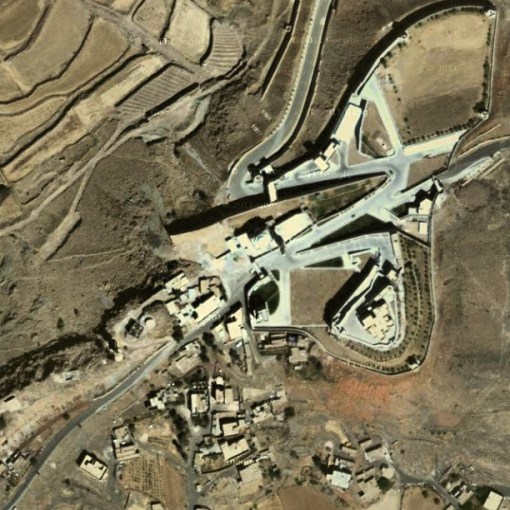
    Some great posts on Dronestagram in the last few days. The Guardian ran a world news post on it this Monday, as did The Atlantic, here. Although David Gregory does the leg-work required to make sense of this over at his Geographical Imaginations blog, here. I’m going to re-quote what David has already quoted over at GI because it speaks to everything that’s critical about the kinds of technological distancing that goes on in drone warfare, and it’s by Dronestagram’s creator, James Bridle:

    The political and practical possibilities of drone strikes are the consequence of invisible, distancing technologies, and a technologically-disengaged media and society. Foreign wars and foreign bodies have always counted for less, but the technology that was supposed to bring us closer together is used to obscure and obfuscate. We use military technologies like GPS and Kinect for work and play; they continue to be used militarily to maim and kill, ever further away and ever less visibly.

    Yet at the same time we are attempting to build a 1:1 map of the world through satellite and surveillance technologies, that does allow us to see these landscapes, should we choose to go there. These technologies are not just for “organising” information, they are also for revealing it, for telling us something new about the world around us, rendering it more clearly.

    History, like space, is coproduced by us and our technologies: those technologies include satellite mapping, social photo sharing from handheld devices, and fleets of flying death robots. We should engage with them at every level. These are just images of foreign landscapes, still; yet we have got better at immediacy and intimacy online: perhaps we can be better at empathy too.

    I mean, come on, that’s such a rich chunk of text – a real, intelligent conceptualization of the US drone war project. James identifies everything that drone warfare pertains to be; bloodless, clinical, and distanced. He also brings together the war technologies of drone control and the play technologies of front-room computer gaming. He tells us that these technologies do more than ‘present’, more than ‘organize’: he tells us they engage and immediate and that we can do a whole lot better than confine them to other, a-sensorial worlds.