lecturer in digital media and culture at the University of Manchester, UK.

sam.hind@manchester.ac.uk

Category: Performance

  • Digital rituals – was alerted to this by Alex Gekker. Great stuff.

    slothstronaut's avatarCURIOUS RITUALS

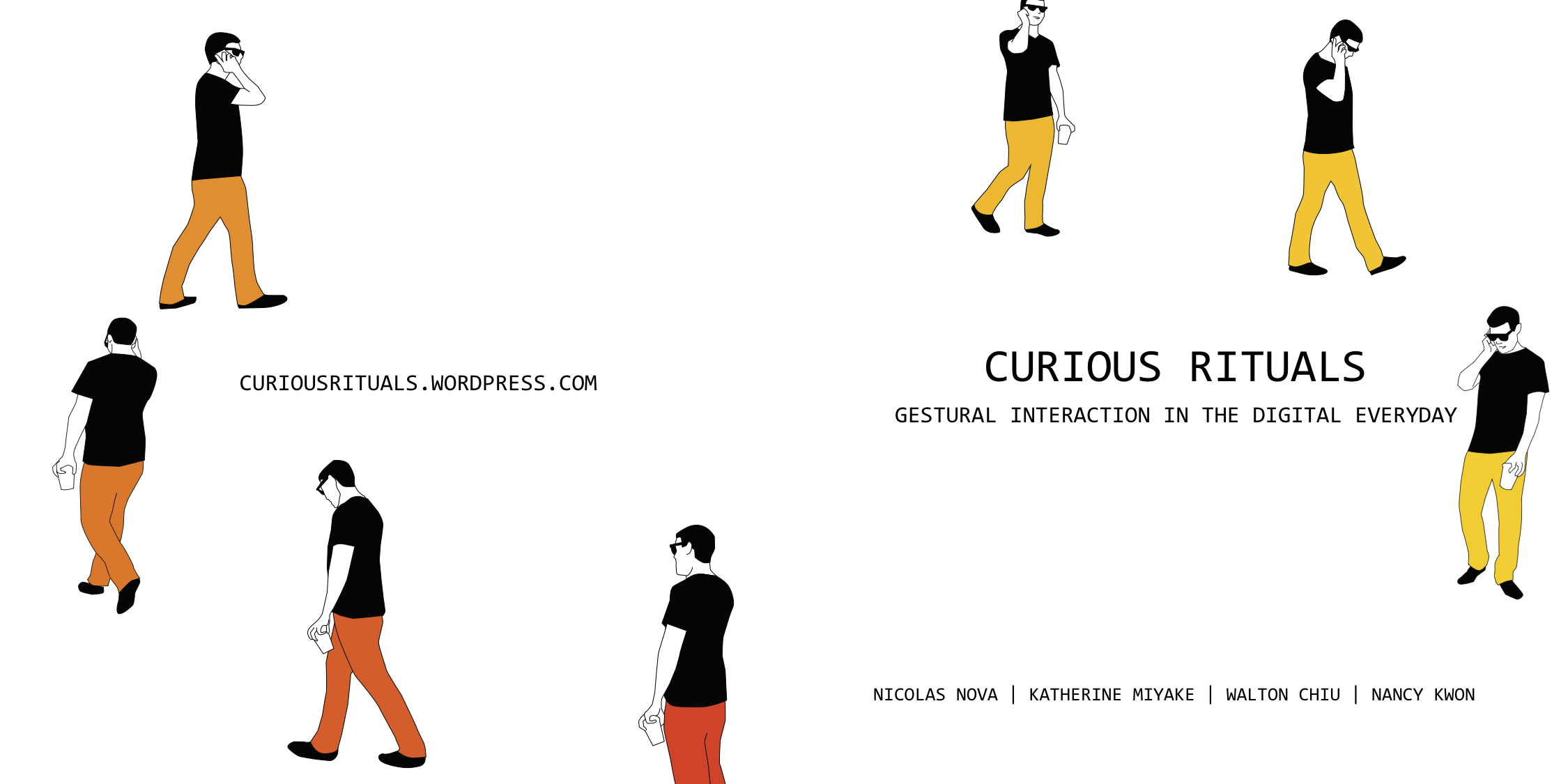
    Project completed! Here’s the Curious Rituals book (PDF, 20Mb). It describes the gestures and postures we observed, introduced by an insightful essay by Dan Hill and followed by a design fiction by Julian Bleecker and the script of the film we produced.


    We’re currently testing the book printing on lulu. Stay tuned.

    View original post

  • Audio link to Christian Nold’s new project from back in October 2012.

    softhook's avatarExtreme Citizen Science blog

    What is being being mapped and to what ends? – CHRISTIAN NOLD
    21 September 2012

    Abstract:
    The presentation discusses Christian’s PhD case study which involves a process of following an engineering focused, noise mapping project funded by the EU. The case study is used to identify the entanglement between subjective experience & devices and power which are at the heart of mapping. The case study highlights a conflict between the experiences of local resident with noise pollution versus the institutional aspirations of mapping protocols. The details of the project expose fundamental ontological and epistemological conflicts about what is being mapped and to what ends. In the project this conflict can be traced backwards from the tools created for the project all the way back to the agenda of the EU research project. The aim of this talk is to provide a real-world example of the role of subjectivity as a…

    View original post 119 more words

  • Another post

    by Patrick Meier at his prolific iRevolution blog took my interest today. Posted back in June 2011, ‘A List of Completely Wrong Assumptions About Technology Use in Emerging Economies’ is about the situated nature of technology. I challenge anyone to read through the comments and still argue that maps aren’t local, situated objects of knowledge. Nothing intuitive, obvious or general about them. As Meier says:

    In one of the training workshops we just had, I was explaining what Walking Papers was about and how it might be useful in Liberia. So I showed the example below and continued talking. But Kate jumped in and asked participants: “What do you see in this picture? Do you see the trees, the little roads?” She pointed at the features as she described the individual shapes. This is when it dawned on me that there is absolutely nothing inherently intuitive about satellite images. Most people on this planet have not been on an airplane or a tall building. So why would a bird’s eye view of their village be anything remotely recognizable? I really kicked myself on that one. So I’ll write it again: there is nothing intuitive about satellite imagery. Nor is there anything intuitive about GPS and the existence of a latitude and longitude coordinate system.

     And

    More wrong assumptions revealed themselves during the workshpos [sic]. For example, the “+” and “-” markers on Google Map are not intuitive either nor is the concept of zooming in and out. How are you supposed to understand that pressing these buttons still shows the same map but at a different scale and not an entirely different picture instead?

    Good for thinking through how situated protest mapping is in the UK – built for specific reasons, terrains and people. Plenty of the comments draw on experiences in non-Western countries, but as one of them says, there is just as much variation in knowledge within Western countries. Using digital maps on mobile devices draws on a whole new world of required actions, and who’s to think the tap, pinch and scroll of touch-sensitive phones is anything like intuitive? New technologies always require a learning process.


  • Reading

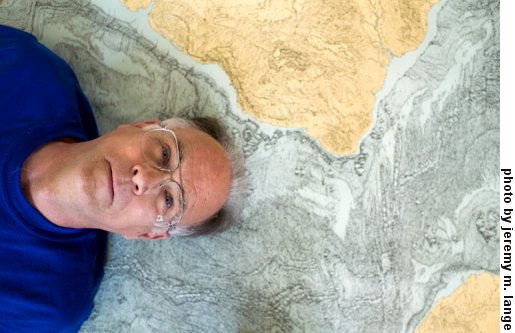
    080515_denis_wood017

    Denis Wood‘s dissertation might just be my next project. It was completed in 1972, and titled I Don’t Want To, But I Will. It’s all to download from his website here. If you don’t fancy wading through the whole 685 pages, at least read the acknowledgements, where there is a quite wonderful attack on his supervisors – in true Wood style! Here’s a section from his preface describing it:

    This dissertation makes no pretense at being objective, whatever that ever was. I tell you as much as I can. I tell you as many of my beliefs as you could want to know. This is my Introduction. I tell you about this project in value-loaded terms. You will not need to ferret these out. They will hit you over the head and sock you in the stomach. Such terms, such opinions run throughout the dissertation. Then I tell you the story of this project, sort of as if you were in my-and not somebody else’s -mind. This is part II of the dissertation. You may believe me if you wish. you may doubt every word. But I’m not conning you. Aside from the value-loaded vocabulary-when I think live done something wonderful, or stupid, I don’t mind giving myself a pat on the back, or a kick in the pants. parts I and III are what sloppy users of the English language might call “objective.” I don’t know about that. They’re conscientious, honest, rigorous, fair, ethical, responsible-to the extent, of course, that I am these things, no farther. (P.12 Introduction)

    Also, I’ve never come across the word ‘rodomontade’ before reading it in Wood’s introduction!

  • Judith Butler’s ‘Bodies on the street’ lecture from last year. As linked to by Derek Gregory.

    Derek Gregory's avatargeographical imaginations

    Judith Butler‘s Wall Exchange‘Bodies on the street’, delivered at the Vogue Theatre in Vancouver last year, has now been posted on YouTube:

    And a Q&A the following day with UBC faculty at the Peter Wall Institute for Advanced Studies is here:

    You can access the text of an early version of the lecture here and here.

    View original post